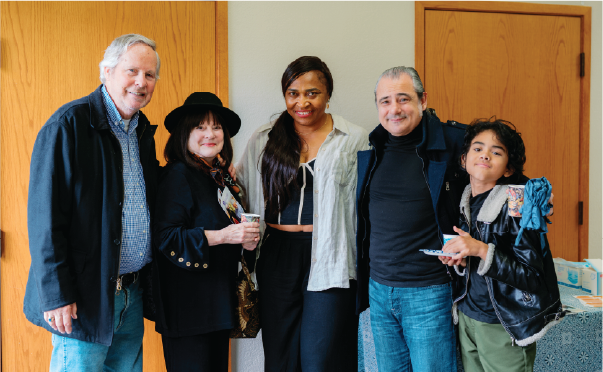
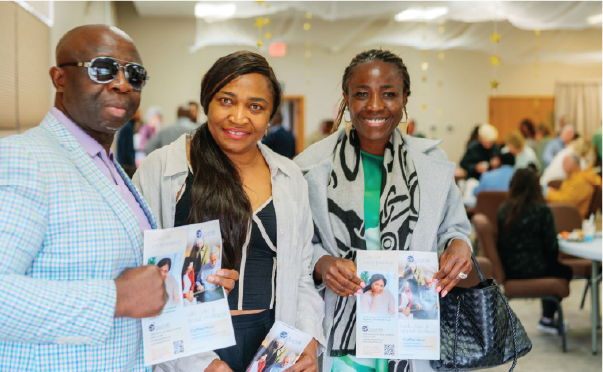
What stayed with me most came after the service. During the meet-and-greet, person after person came up to share something deeply personal, a story about a friend who struggled, a family member everyone “didn’t know how to help,” or signs they now wished they hadn’t ignored. Two people spoke about neighbors lost to suicide. Several widows told me about navigating fresh grief and how lonely the journey can feel. These weren’t abstract examples; these were their real lives.
I was honestly surprised. Sometimes we assume stigma lives “somewhere else” in other cultures, other countries, other generations. But standing there listening to those stories, it became clear again: mental illness is universal. It crosses age, race, and background. It shows up quietly in Christian families, in immigrant homes, in long-married couples, and in the elders we love but don’t always know how to check on.
Throughout the morning, I found myself asking people the same gentle question: “Do you have support around you?” Many did. Some didn’t. But everyone understood how much it matters.
Despite the heavy topics, the atmosphere was unexpectedly warm. People were smiling, relieved to speak openly, relieved to feel understood. The rain outside felt like a small contrast to the small, steady light people were offering one another in that room. It reminded me why community conversations matter, why simply naming what we face is often the first step toward healing.